
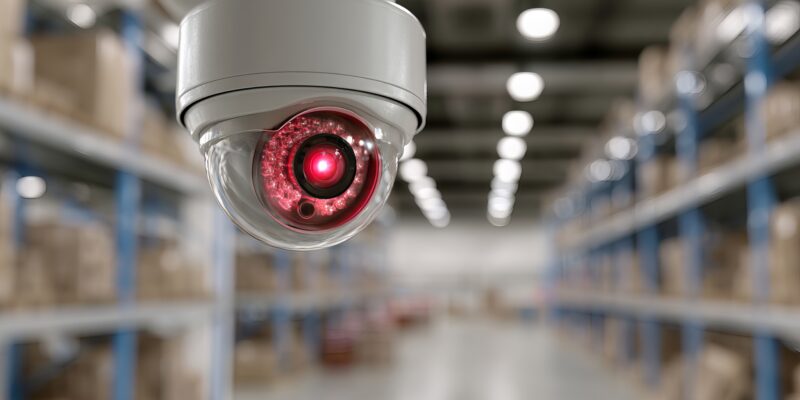
At Maffey’s Security Group, we help businesses in Elizabeth, New Jersey, and across the state stay protected with reliable commercial alarm monitoring. Understanding how 24/7 monitoring works helps property owners and facility managers make informed decisions that improve safety, compliance, and operational continuity. It also helps organizations reduce liability, protect assets, and maintain business continuity during emergencies.
Key Takeaways
- Commercial alarm monitoring connects intrusion, fire, and environmental systems to a staffed central station operating 24/7.
- Trained operators verify alarms and quickly dispatch emergency responders, reducing damage and false-alarm fines.
- New Jersey requires alarm contractors to be properly licensed, making provider verification essential for compliance.
- Dual-path communication using cellular and internet ensures alarm signals are transmitted even if one path fails.
- Integrated monitoring with access control and CCTV enhances verification and overall security effectiveness.
How 24/7 Monitoring Protects New Jersey Commercial Properties
Continuous monitoring ensures that every alarm signal is addressed immediately, whether it occurs during business hours or overnight. For commercial properties in Elizabeth, New Jersey, and throughout the state, this level of protection supports life safety, asset protection, and regulatory compliance.
Solutions such as commercial alarm systems form the foundation of reliable 24/7 monitoring. This approach is especially important for retail stores, offices, warehouses, healthcare facilities, and multi-tenant properties.
What Happens When an Alarm Is Triggered
When a sensor, such as a motion detector, door contact, smoke detector, or pull station, activates, the control panel sends a digital signal to a staffed central station.
Trained operators assess the signal and follow a verified response protocol.
They contact designated keyholders when appropriate and dispatch police or fire services without delay when needed, consistent with industry best practices outlined by the National Fire Protection Association.
Central Station Monitoring vs. Self-Monitoring
Self-monitoring relies on app notifications sent to a business owner’s phone, which can be missed due to travel, meetings, or lack of signal. Central station monitoring ensures trained professionals respond at all times.
This approach provides dependable protection for New Jersey businesses with valuable inventory, equipment, and occupied spaces.
Fire Alarm Monitoring and NJ Code Compliance
Commercial fire alarm monitoring must comply with NFPA 72 and local Authority Having Jurisdiction (AHJ) requirements. In New Jersey, municipalities may have specific rules and penalties related to fire alarm systems and false alarms.
Working with a knowledgeable, licensed provider helps ensure your system meets all applicable codes and standards recognized by organizations such as UL Solutions.
Technologies That Strengthen Commercial Alarm Monitoring
Modern alarm monitoring systems use advanced communication and integration technologies to improve reliability, visibility, and response times. These capabilities are especially valuable for multi-tenant buildings, warehouses, offices, and regulated facilities across New Jersey.
Integration with tools like access control and CCTV systems allows facility managers to manage security events more efficiently and make faster, better-informed decisions.
Dual-Path Communication for Reliable Signal Transmission
Today’s commercial alarm systems use dual-path communication, typically combining cellular and internet transmission. If one communication path is interrupted due to service outages or physical damage, the backup path automatically carries the signal to the monitoring center, ensuring uninterrupted protection.
This redundancy is essential for maintaining continuous communication during power outages, network disruptions, or deliberate line tampering.
Intrusion and Environmental Monitoring for Comprehensive Protection
Commercial monitoring extends beyond intrusion detection to include environmental threats such as carbon monoxide, flooding, and temperature fluctuations. This comprehensive approach is critical for facilities like healthcare offices, data rooms, warehouses, and properties with sensitive equipment or inventory.
Early detection helps prevent costly damage, operational downtime, and safety hazards. It can be complemented by communication tools like intercom and paging systems for faster on-site response and coordinated emergency actions.
Integration with Access Control and CCTV
When alarm systems are integrated with access control and CCTV, businesses gain greater visibility and faster verification. Unusual access events or motion alerts can be reviewed with the corresponding video. This helps reduce false alarms and enables more accurate and efficient emergency response across complex commercial environments.
Integrated systems also provide valuable audit trails that support investigations, compliance reporting, and operational oversight.
Get Professional Commercial Alarm Monitoring for Your NJ Property
Maffey’s Security Group has been protecting commercial properties across Elizabeth, Union County, and greater New Jersey since 1910. We provide commercial alarm systems, 24/7 monitoring, access control, CCTV surveillance, and commercial locksmith services.
Our team delivers reliable protection from a single trusted provider. We offer a streamlined solution for both security and fire protection. Contact us to request a quote.
Frequently Asked Questions
How much does commercial alarm monitoring cost?
Pricing varies based on system size, communication methods, and whether services like inspections, maintenance, or environmental monitoring are included.
Is fire alarm monitoring required in New Jersey?
In most commercial occupancies, fire alarm monitoring is required by code. Systems must comply with NFPA 72 and local Authority Having Jurisdiction requirements to ensure proper signal transmission, coordinated emergency response, and compliance with municipal safety regulations.
What is a UL-listed central station?
A UL-listed central station meets rigorous standards for redundancy, staffing, cybersecurity, and signal handling established by Underwriters Laboratories. Many insurers and local jurisdictions prefer or require UL-listed monitoring for commercial fire alarm systems because of their proven reliability.
What should a commercial monitoring contract include?
A commercial monitoring contract should outline 24/7 central station coverage, communication methods such as cellular and internet, response procedures, inspection and testing responsibilities, service terms, equipment ownership, and clear cancellation provisions. These details help prevent unexpected costs and service gaps.